
Nasturtium Leaves & Stems Raita (Yogurt Dip)
A bowl of cool yogurt can turn a peppery garden leaf into a bright, useful sauce. Nasturtium leaves and stems raita takes about five minutes, needs no stove, and skips the butter or mayonnaise found in many creamy dips.
The flavor is lightly tangy, fresh, and peppery, with yogurt softening the leaves' mustard-like bite. Use it as a raita beside a warm meal or as a chilled sauce for vegetables, sandwiches, and grilled food. Only pick correctly identified, culinary-grade nasturtiums from a clean growing area.

A no-cook recipe and can be put together in just 5 minutes. Fresh and light it has a slightly tangy and peppery taste from yoghurt and Nasturtium. It can be used as a sauce or a dip.
This sauce or dip goes well with almost anything. Try it on your kebabs, baked potatoes, as a dip to your barbeques or enjoy it with parathas, rotis, naans, rice, biryanis etc.
So what is Nasturtium?
If you follow me on Instagram, you will know that I love gardening. I love to grow my own veg and herbs in whatever space I have. So this year I have grown a few edible herbs and flowers. Nasturtium is one of them.
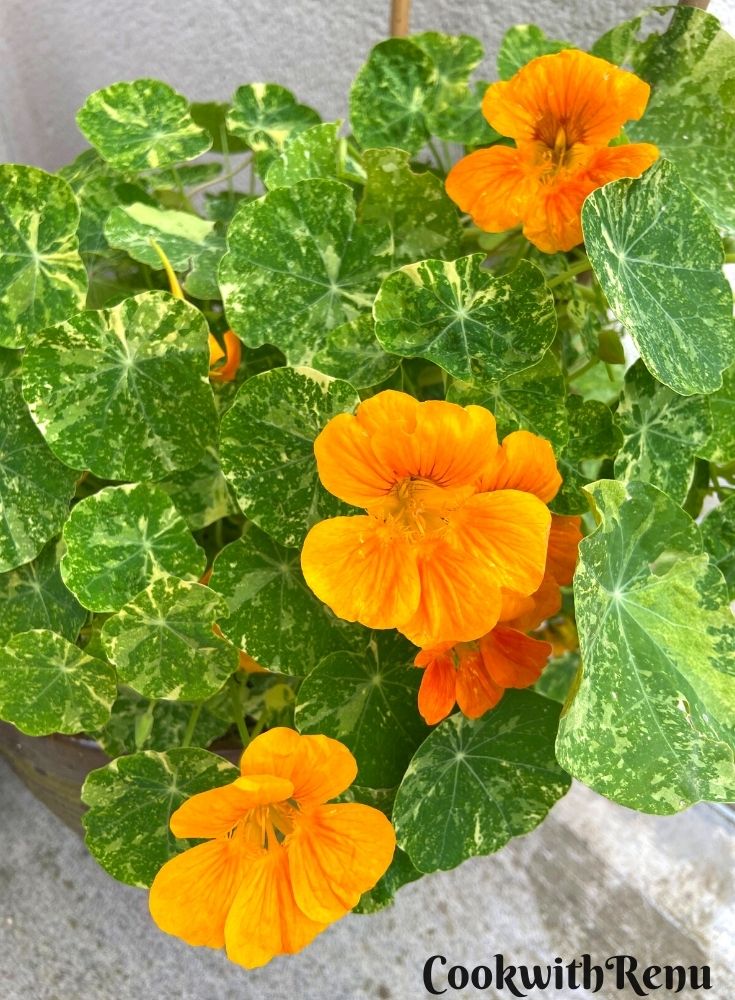
The whole Nasturtium plant is edible. Its leaves, stems, seeds and flowers. It is believed to be a rich source of Vitamin C and helps improve the immune system.
Nasturtium is a hardy annual flower and easy to grow. And I can vouch for that it's hardy. The seeds for me germinated in march end and I kept the plan outside. Due to frost, I thought I killed it. But after a month, it started blooming and I was so thrilled that I did not threw it.
They self-seed too. Now I do not sow the seeds; they are in my flower bed and come every year.
They come in bushy and climbing varieties with attractive colourful flowers. Pollinators like bees, butterflies are attracted to the beautiful flowers. They are generally planted as companion planting to different vegetable plants as they attract aphids.
The leaves, stems and flowers have a peppery taste. I have yet not tasted the seedpods. The seed pods can be pickled to make capers. The leaves and flowers can be eaten raw in salads. Nasturtium pesto is a very common recipe made using Nasturtium leaves. I am coming with a few recipes that I am trying.
It is said that the small leaves are tender and have more flavour. I did not find any difference. I have used both the big and small in my recipe.
And when the plant matures and goes to the seed stage, I save them and make this Pickled Nasturtium Seeds (Nasturtium Capers). They are tangy, peppery little bites that are pickled in vinegar along with spices of your choice.
How did I think to make Peppery Nasturtium Raita?
I think I am the first one to make this Nasturtium Raita, and I am happy about it. I did not want to make pesto from it and was wondering what I can.

The other day I was making Zucchini parathas from my garden fresh Zucchini and I wanted to pair it with some raita. I thought of cucumber raita but wanted to make something different.
Then I was working in my garden and I was looking at these beautiful nasturtium flowers. Eureka moment...I can make Nasturtium leaves and stems raita, yes why not? So a new recipe was born.
I made a very small batch as my husband and kids do not enjoy raita. I had left just 3-4 tablespoons for him and got a comment that it was so less. Why did you not make it more? Really :-). So you know that it definitely tasted good. I have already made this a couple of times in the last 1 month.
What is Raita?
Raita is a yogurt-based Indian side dish often made with vegetables, fruit, herbs, or boondi, which are tiny fried chickpea flour pearls. It commonly appears next to flatbreads, rice, biryani, and boldly spiced dishes because cool yogurt eases the heat.
A classic cucumber raita shows the familiar balance of creamy yogurt, crisp vegetables, and warming spices. This version is a creative garden-based variation, not a traditional regional recipe. It uses nasturtium greens in place of cucumber or alongside it.
Serve it cold, not icy. A raita should refresh the palate without becoming so chilled that its seasonings disappear.
Raita is basically a side dish that contains raw or cooked vegetables, fruits, or boondi. It is generally served along with rotis, parathas, rice, or biryanis. Meant to have a cooling effect on your body.
Choosing and Preparing the Nasturtium
Both large and small leaves work in this recipe. Choose leaves that look crisp and green, then use only tender sections of the stems. Cut away tough ends, yellow patches, insect damage, or anything that looks wilted.
Use nasturtiums grown for eating, or harvest them from an area free of pesticides, herbicides, roadside pollution, and animal waste. Don't eat leaves simply because a plant is called a nasturtium. Correct plant identification matters, especially when a plant came from an ornamental nursery or an unknown garden.
Garden plants treated with chemicals are not automatically safe to eat, even when the plant itself is edible.
A quick taste before mixing helps, too. Pepperiness varies by plant, season, weather, and leaf size. Young leaves usually have a gentler flavor than mature ones.

Recipe process of Nasturtium Leaves & Stems Raita
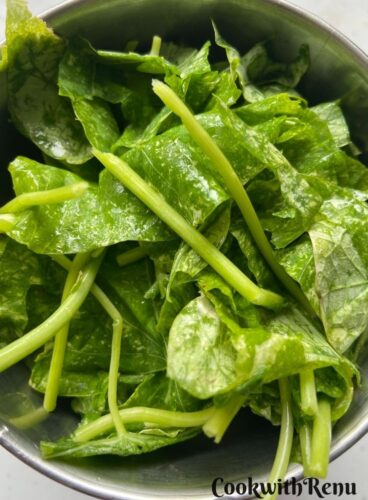
The recipe uses both Nasturtium leaves and stems to make the raita. All I did was pluck some leaves and stems from my beautiful Nasturtium plant. Both big and small leaves along with the stems, are fine.
Rinse them thoroughly under cool running water. I like to soak them in salted water for at least 30 minutes. Then rinse again, leave them in a colander, or pat them dry with a clean towel. Excess water can make the yogurt thin before you have a chance to adjust it.
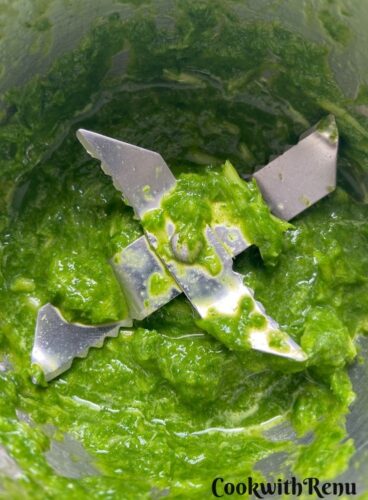
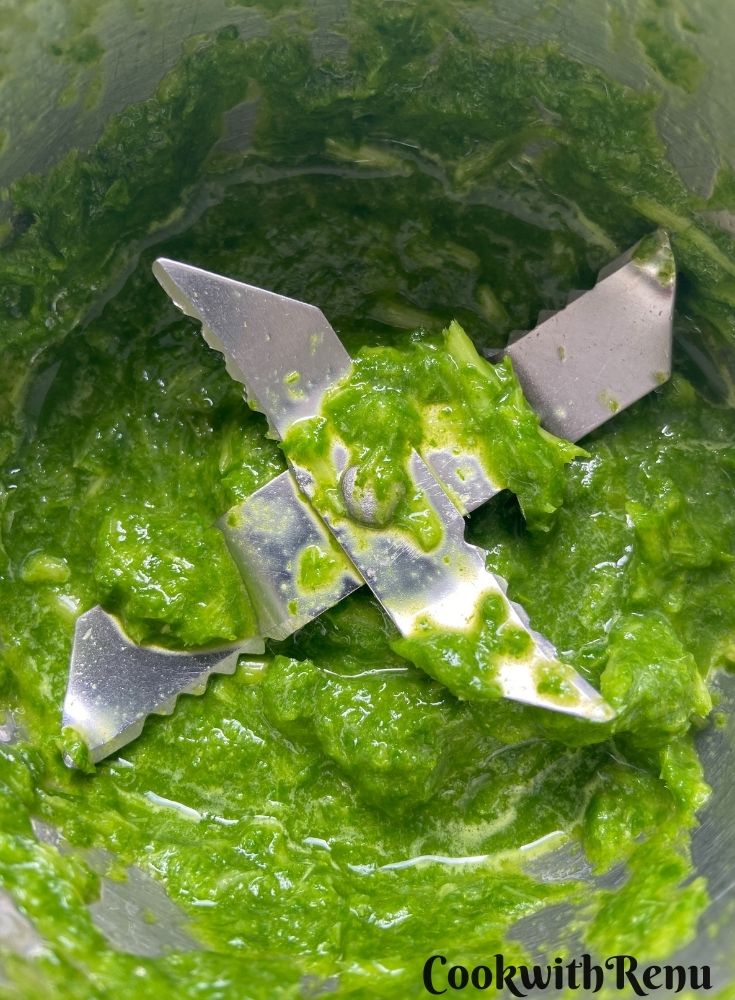
Then I simply ground the leaves and stems, along with thick, strained yogurt, in a blender jar to a smooth texture. One can even chop them finely. I have tried both ways, and it tastes equally good.
Next added some cumin powder and salt and that's it. Water was added just to puree the Nasturtium leaves and stems to a smooth consistency. one can completely skip adding the water.
For sauce or raita consistency, we can add a little water if required. I have used my homemade yoghurt, so the consistency is perfect. If you want it creamier and more like a dip, use greek yoghurt and do not add any water.
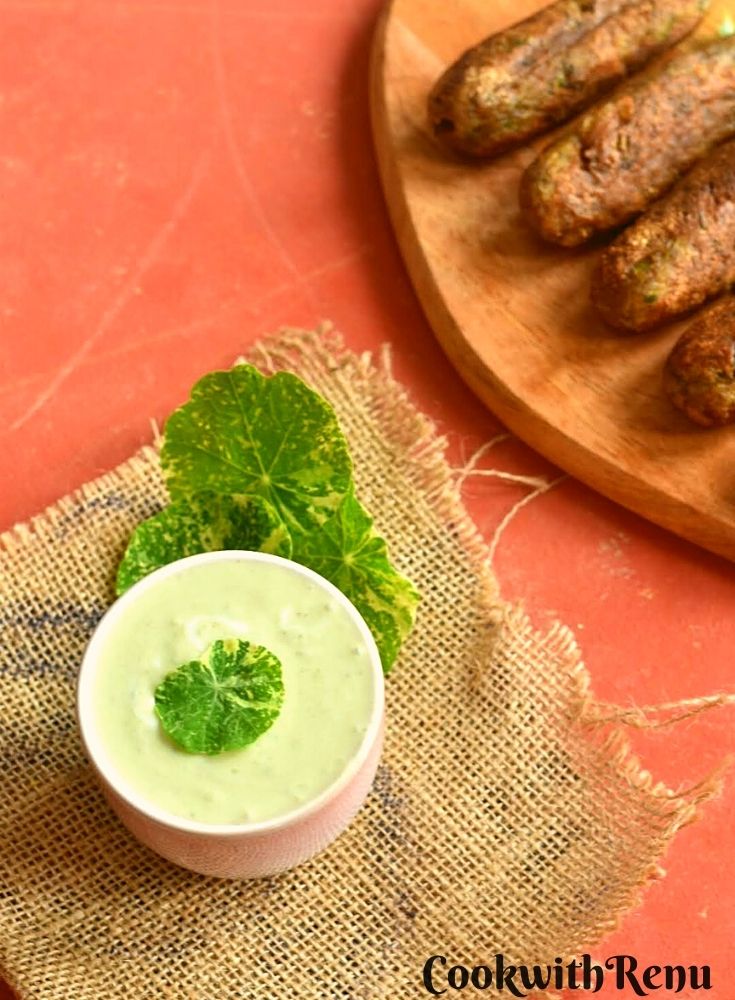
How to Adjust the Yogurt Dip for the Best Texture
The yogurt you choose controls much of the final consistency. Full-fat Greek yogurt makes a thick, rich dip that clings to a chip, kebab, or piece of flatbread. Regular plain yogurt creates a lighter raita that is easier to spoon over rice.
Use this simple guide when adjusting the mixture:
| If you want | Start with | Adjustment |
|---|---|---|
| A thick dip | Greek yogurt | Add no water |
| Spoonable raita | Plain yogurt | Keep the greens chopped or lightly blended |
| A pourable sauce | Plain or Greek yogurt | Add water 1 teaspoon at a time |
A little water goes a long way. Stir fully after each teaspoon before deciding whether it needs more. If the yogurt looks watery straight from the container, drain it in a fine sieve for a few minutes first.
What to Serve With Nasturtium Yogurt Raita
Cool yogurt and peppery greens create contrast beside hot, dry, or heavily spiced foods. Spoon the raita over vegetable biryani or plain rice. Serve it next to dudhi parathas, rotis, or naan, where it adds welcome moisture to warm bread.
It also works outside an Indian-style meal. Put a generous spoonful beside grilled vegetables, baked potatoes, kebabs, roasted chicken, lamb, or barbecue. The creamy dip softens smoky edges and balances chile heat without weighing down the plate.
For lunch, spread a thicker version inside a sandwich with grilled zucchini or chicken. Thin it with a teaspoon or two of water and use it as a dressing for a grain bowl with chickpeas, roasted carrots, and greens.
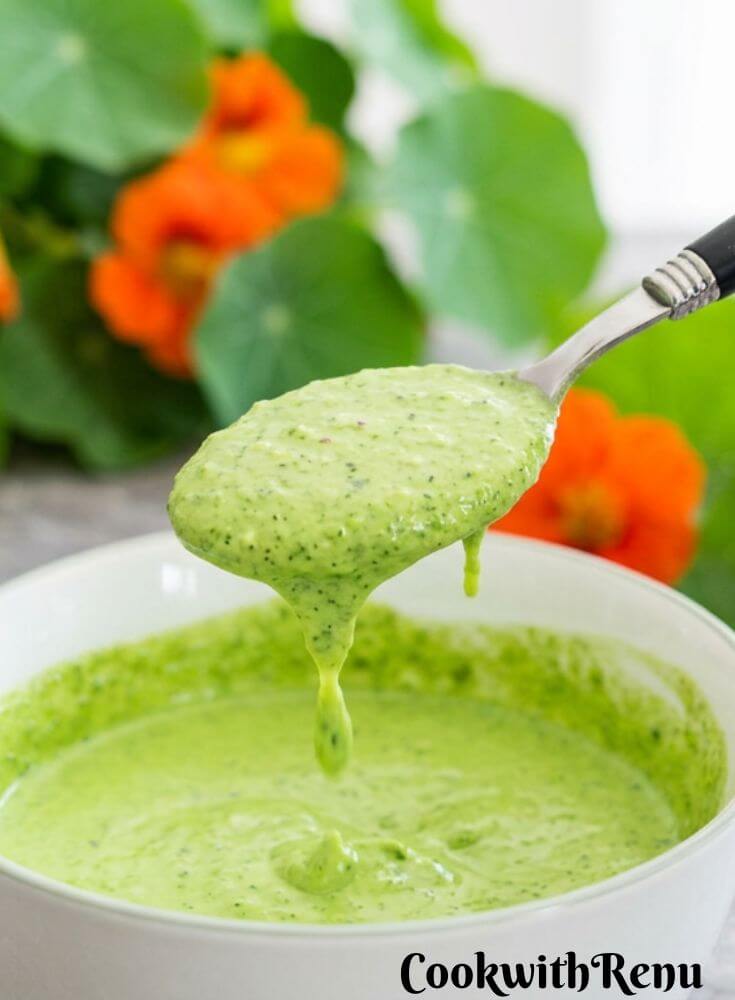
Best Ways to Serve It at a Meal or Gathering
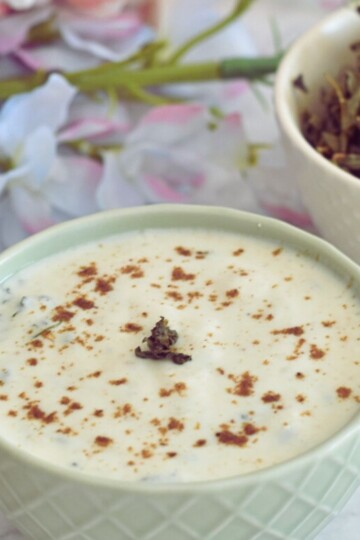
Serve the raita chilled in a small bowl. Finish it with a swirl of plain yogurt, a pinch of cumin, or a few edible nasturtium flowers. Keep flowers separate from the blended leaves so their shape and color stay visible.
At a cookout or casual dinner, place the bowl near kebabs, flatbreads, and roasted vegetables. It makes a lighter alternative to mayonnaise-based dips, yet it still has enough body for a pita wedge or sturdy raw vegetable.
Make the dip shortly before guests arrive. Its color looks brightest on the first day, and the peppery flavor remains clean.
Helpful Tips, Variations, and Storage
Taste the leaves before you measure them. If they are mild, use the full cup of loosely packed greens. If they are aggressively peppery, begin with half a cup and add more after tasting.
Make a small batch first if nasturtium is new to you. You can double the yogurt, greens, cumin, and salt evenly once you know the flavor you like. Avoid adding lots of water at the beginning because thickening a loose yogurt dip is harder than thinning a thick one.
Refrigerate leftovers promptly in a covered container. Follow the storage guidance on your yogurt package, and discard the raita if its smell, color, or texture changes. Don't leave dairy-based dip sitting out for long periods, especially at an outdoor gathering.

Nasturtium Leaves & Stems Raita (Yogurt Dip)
 Print
Pin
Rate
Save
Cook ModeShare Recipe
Print
Pin
Rate
Save
Cook ModeShare RecipeEquipment
- Chopper
- Recipe
Ingredients
- 1 Cup Loosely packed Nasturtium leaves and stems
- 1 Cup Yoghurt - Strained
- 1 teaspoon Cumin Powder
- Black Salt to taste - Any type of salt can be used
Instructions
- Pick up the leaves and stems and rinse them thoroughly to get rid of any dirt or impurities.1 Cup Loosely packed Nasturtium leaves and stems
- Soak them in salted water for at least 30 minutes.
- Drain and rinse again.
- Pat them dry or leave them in a colander to remove any excess water.

- In a blender jar, puree the leaves and stems.1 Cup Loosely packed Nasturtium leaves and stems
- Add half yogurt to grind to a smooth consistency.
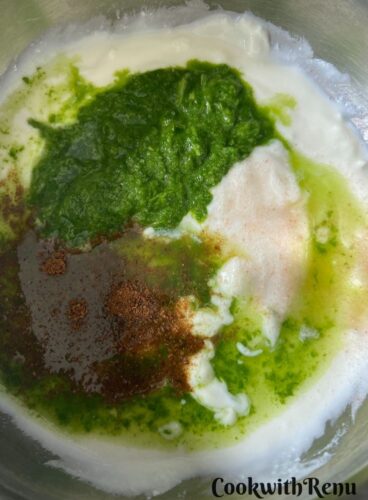
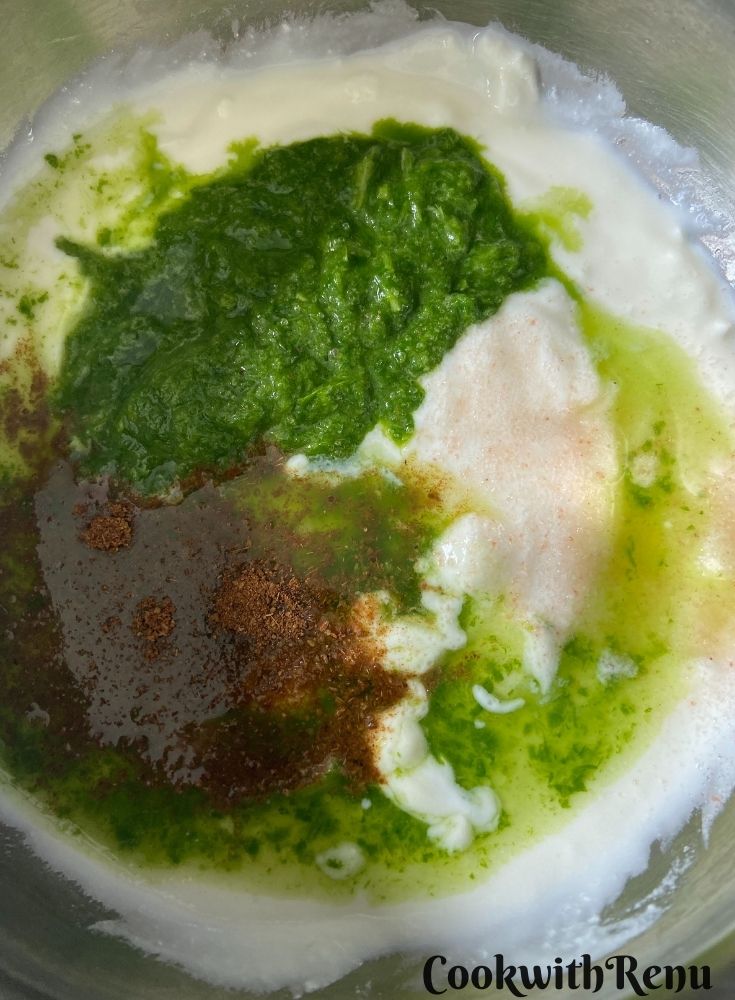
- In a wide bowl, add the remaining yoghurt and whisk it to a smooth consistency.1 Cup Yoghurt
- Add in the puree of leaves and stems of nasturtium.
- Add in cumin powder and black salt.1 teaspoon Cumin Powder, Black Salt to taste
- If you need thin consistency add water or skip it.

Video
Notes
- Greek yoghurt can be used to get a much creamier and thick consistency.
- Do not add water for a thick consistency.
- One can chop the leaves instead of making a paste of leaves & stems
Linking this with
Check out the delicious Main Course Accompaniments prepared by our Sunday Funday group
- Broccoli Rice Casserole by Making Miracles Garlic & Paprika Roasted Cauliflower by Amy's Cooking Adventures
- Roasted Veggie Couscous by A Day in the Life on the Farm
- Matar Bharay Patties by Sneha's Recipe
- Cherry Tomato and Avocado Salad by Mayuri's Jikoni
- Creamy Macaroni Salad by Palatable Pastime
- Nasturtium Leaves & Stems Raita (Yogurt Dip) (Using Nasturtium Leaves & Stems by Cook with Renu

Updates
This recipe was first posted on my blog on 22nd August 2021, today the 3rd August 2026, I am updating the contents a bit and adding fresh new pics and a video too.
Tried this recipe? Please comment and rate the recipe. Share your pics and tag us.
Subscribe to my email list to get the new recipes straight into your mailbox.
Join our Whatsapp Community to get direct recipe links. Join here.

Indian Cooking Confidence Guide
Learn the basics. Build confidence. Enjoy simple Indian cooking.




I have used nasturtiums in salads for the added flavor and color. I am anxious to try this riata or maybe to look up the pesto recipe.
The COLOR on that is just beautiful!!
Never seen these leaves, but this raita is delicious and love that color.
A totally different kind of yogurt dip or raita. Nasturtium leaves &stems raita must have tasted so good with the homemade kebabs. Hopefully, next summer I will be able to grow a few herbs and edible flowers in pots.
Very informative post, Renu. I have used nasturtium and other flowers in salads but never thought of cooking them. The recipe sounds really easy. Next year I will grow nasturtium just to try this:) Pinning!
Hope you like it. Thank You
This raita is such a great way to use nasturtiums, Renu! I was just looking at the plants yesterday and thinking what should I make. So perfect timing!
Thank You, Hope you like it.
Just tasted it before I've let it sit and chill and it's already delicious. Thank you, what a great idea!
Ah great, glad you liked it. Thank You for the feedback Liz.
Made this and served with pan-seared tuna. Excellent substitute for wasabi. Added a little dill and some melon mash for an underlying touch of sweetness. Don’t forget that the flowers seed pods can also be used. They have a strong turnip-horseradish taste. Lovely recipe.
Thank you for your feedback, Glad you liked it. Yes, I do use all the things from Nasturtium plants. Flowers go in pancakes, fritters or I make infused Vinegar from it. Just the recipe is not yet on blog, hopefully will share. If you can also rate the recipe it would be so good. x
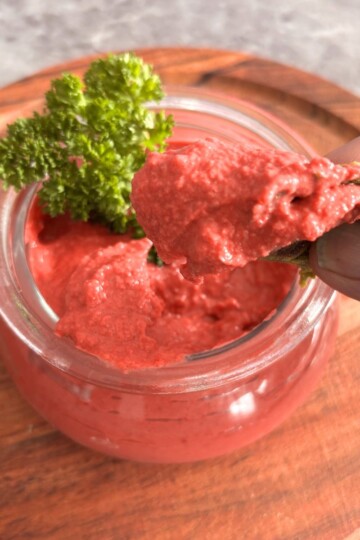
That colour of the raita in the last pic!!!!! OMG. I am speechless, Renu. I am not sure I have this plant around here, and what a lovely side to kebabs or as a dip !
Thank you, Kalyani. It is all natural colours and how they change when mixed with each other. I think it grows in India as well, but before you make anything, do check if it is safe to consume.
Wow! Nasturtium Raita is absolutely delicious. I must make some; it will taste good with parathas too. I do not think I can get the Nasturtium plants here, but will still check.
Hi, India has that plant, but still I am not 100 Percent sure. It surely does; paratha and raita are a favourite combo. Renu
This is such a good and easy side dish with many health benefits. I am on the lookout for Nastirtium plant now.